Keeping your digestive system healthy is key to feeling good. A low residue diet is a great way to do this. It’s become popular in 2026 for its benefits to digestive health and gut health.
A low residue diet helps by reducing undigested food in the colon. This lowers the chance of discomfort and problems with the gut. Eating foods that are easy to digest helps keep the gut healthy and can reduce bloating and pain.
Key Takeaways
- A low residue diet can help alleviate digestive discomfort.
- Easily digestible foods are key to promoting gut health.
- This dietary approach is particularly beneficial for individuals with certain gastrointestinal conditions.
- A well-planned low residue diet can minimize the risk of complications.
- Following a low residue diet can lead to overall improved digestive health.
What Is a Low Residue Diet ?
A low residue diet is suggested for those with certain digestive issues. It aims to cut down on undigested food reaching the colon. This helps avoid irritating the digestive system.
Definition and Basic Principles
This diet limits foods rich in fiber, seeds, nuts, and some fruits and veggies. It focuses on easy-to-digest foods that leave little residue in the colon. Foods like refined grains, lean proteins, and cooked or canned fruits and veggies are recommended.
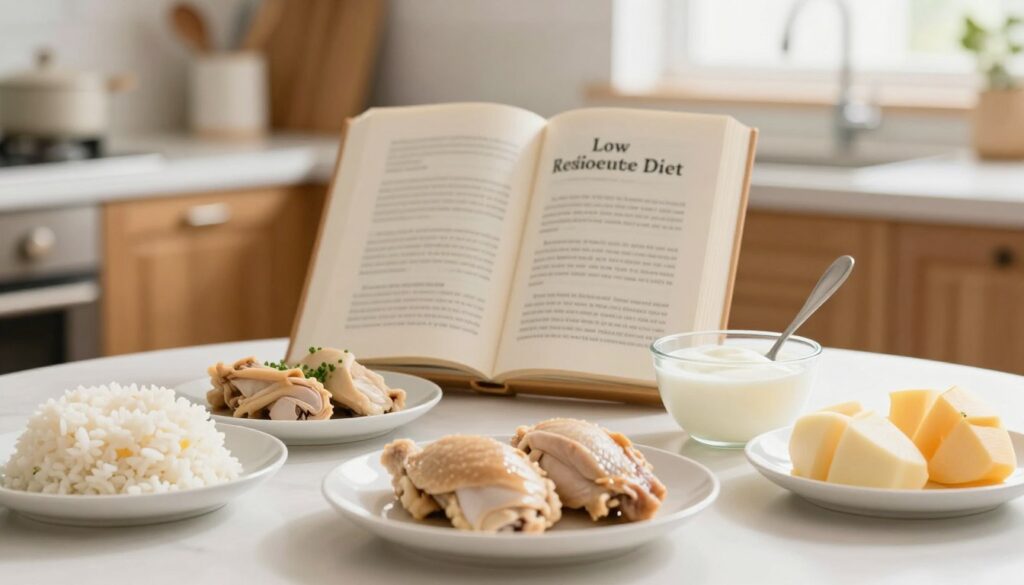
| Food Category | Recommended Foods |
|---|---|
| Grains | White bread, refined pasta, plain crackers |
| Fruits | Canned fruits, cooked apples, bananas |
| Vegetables | Cooked carrots, green beans, peeled potatoes |
How It Differs from Low-Fiber and Other Therapeutic Diets
A low residue diet is not the same as a low-fiber diet. The low-fiber diet cuts down on fiber intake. But a low residue diet aims to reduce all undigested food, not just fiber.
Medical Conditions That Benefit from a Low Residue Diet
The low residue diet helps manage symptoms of various digestive disorders. It’s often suggested for those with specific gastrointestinal conditions. These conditions can benefit from less residue in the diet.

Inflammatory Bowel Disease (Crohn’s and Ulcerative Colitis)
Inflammatory Bowel Disease (IBD), including Crohn’s disease and ulcerative colitis, benefits from a low residue diet. It helps reduce symptoms like diarrhea, abdominal pain, and urgency. By avoiding high-fiber and hard-to-digest foods, IBD patients can better manage their condition.
Diverticulitis and Diverticulosis
For those with diverticulitis or diverticulosis, a low residue diet can ease symptoms and prevent complications. Diverticulitis causes inflammation of the diverticula. A low residue diet can help avoid making it worse. Eating easy-to-digest foods can reduce discomfort and aid in healing.
Pre and Post-Surgical Dietary Management
Pre and post-surgical dietary management also benefits from a low residue diet. Patients preparing for or recovering from bowel surgery may be told to follow this diet. It helps prevent complications and supports recovery. This approach ensures the digestive system isn’t overwhelmed during healing.
The Science Behind Low Residue Diets in 2026
In 2026, our understanding of low residue diets is growing. This growth helps us better manage digestive health. It’s all about how our bodies handle food, leading to more personalized diets.
Modern Understanding of Digestive Processes
Recent studies have really improved our grasp of digestive processes. We now know that how our bodies digest food can vary a lot. This is due to things like gut health and certain health conditions. This knowledge makes low residue diets a valuable treatment option.
Recent Research on Gut Microbiome and Residue
Recent research shows the gut microbiome is key to our health. It tells us how our bodies react to different foods. Low residue diets can help by cutting down on hard-to-digest foods. This can ease symptoms for people with sensitive stomachs.
Foods Allowed on a Low Residue Diet
Knowing what foods are okay on a low residue diet is key to good digestive health. This diet includes foods that are easy to digest. It helps avoid too much undigested food in the colon.
Proteins and Dairy Products
Proteins and dairy are important in a low residue diet. They give vital nutrients without stressing the digestive system too much.
Meat, Fish, and Eggs
Lean meats like chicken, turkey, and lean beef are good choices. Fish and eggs are also great protein sources that digest well.
Dairy Options and Alternatives
Lactose-free dairy products or dairy alternatives like almond milk are okay. It’s important to pick low-fat, low-fiber options.
Refined Grains and Low-Fiber Starches
Refined grains are also part of a low residue diet. White bread, white rice, and refined pasta are easier to digest than whole grains.
Cooked and Peeled Fruits and Vegetables
Cooking and peeling fruits and veggies makes them better for a low residue diet. Cooked carrots, peeled apples, and well-cooked squash are good examples. These preparations cut down on fiber, making them easier to digest.
| Food Category | Examples |
|---|---|
| Proteins | Lean meats, fish, eggs |
| Dairy | Lactose-free milk, almond milk |
| Grains | White bread, white rice, refined pasta |
| Fruits and Vegetables | Cooked carrots, peeled apples, well-cooked squash |
Foods to Avoid When Following a Low Residue Diet
When you’re on a low residue diet, it’s key to know which foods to skip. This diet helps reduce the amount and frequency of bowel movements. It’s designed to ease symptoms of certain gut issues. Foods high in fiber or hard to digest should be avoided.
High-Fiber Foods and Whole Grains
High-fiber foods and whole grains are big no-nos on a low residue diet. Here are some examples:
- Whole grain bread and cereals
- Legumes like beans, lentils, and peas
- Berries and other fruits with seeds or skins
Steering clear of these can help avoid irritating your digestive system.
Seeds, Nuts, and Foods with Tough Skins
Seeds, nuts, and foods with tough skins are tough to digest. Here are some examples:
- Nuts and seeds, including popcorn kernels
- Raw vegetables with tough skins, like corn on the cob
- Fruits with seeds or pits, like figs or dates
These can irritate and upset your stomach if you have a sensitive gut.
Spicy Foods and Other Potential Irritants
Spicy foods and other irritants should be skipped on a low residue diet. Here are some to avoid:
- Spicy dishes with hot peppers or wasabi
- Caffeine and carbonated drinks, which can upset your stomach
- High-fat foods, which slow digestion and cause discomfort
By avoiding these, you can manage your digestive health better and lower the risk of problems.
Personalizing Your Low Residue Diet Plan
A diet plan made just for you can really help your digestive health. By knowing how your body reacts to food, you can pick the right foods. This way, you get the nutrients you need and feel better.
Assessing Your Individual Digestive Triggers
Finding out which foods upset your stomach is key. Keeping a food diary helps you see which foods are troublemakers. This lets you make smart choices about what to eat and avoid.
Working with Dietitians for Customized Approaches
Working with a dietitian can lead to a customized diet plan that fits your life and health goals. They help balance your diet and manage your digestive issues. This way, your diet is both helpful and easy to follow.
A dietitian can also help you eat well when you’re out. They offer great advice for staying on track with your diet in social situations. Their support is key to keeping your digestive health good.
Sample 7-Day Low Residue Meal Plan for 2026
In 2026, we’ve updated our 7-day low residue meal plan. It’s packed with balanced and varied meals to ease digestion.
Nutritionally Balanced Breakfast Options
Starting your day with a good breakfast is key. Try scrambled eggs with refined toast, oatmeal with low-fat milk, or yogurt parfait with granola-free topping. These options are easy on your stomach and full of nutrients.
Lunch and Dinner Ideas with Modern Alternatives
For lunch and dinner, pick dishes that are easy to digest. Think grilled chicken with cooked vegetables, low-residue pasta with marinara sauce, or lean beef with mashed potatoes. You can also use cauliflower rice and zucchini noodles for variety. Here are some meal ideas:
- Grilled chicken breast with steamed carrots
- Low-residue pasta salad with olive oil dressing
- Baked salmon with roasted sweet potatoes
Satisfying Snacks and Desserts
Snacks and desserts can be tough on a low residue diet. But, there are still tasty options. Enjoy apple sauce, low-fat yogurt, or smoothies with allowed fruits. For dessert, try sorbet or gelatin desserts. They’re yummy and gentle on your stomach.
Implementing a Low Residue Diet in Everyday Life
Adding a low residue diet to your daily routine is easy with the right tips. It’s about being careful with what you eat, everywhere you go. This includes at home and when you’re out with friends.
Grocery Shopping Tips and Product Recommendations
At the grocery store, choose refined grains, cooked fruits and veggies, and lean meats. Look for “low residue” or “easy to digest” labels. Brands like Gerber’s for strained foods and Uncle Ben’s for refined rice are good choices.
| Product Category | Recommended Brands |
|---|---|
| Refined Grains | Uncle Ben’s, White Bread |
| Canned Fruits/Veggies | Del Monte, Libby’s |
Dining Out and Social Situations
Eating out can be tricky, but many places have low residue options. Choose simple dishes like grilled chicken or fish with plain rice or veggies. At social events, eat before you go or bring a dish that fits your diet.
As a dietitian says, “A low residue diet is not just about avoiding certain foods, it’s about making informed choices that support your digestive health.“
Potential Benefits and Symptom Management
For people with certain digestive issues, a low residue diet can help. It reduces the intake of foods that are hard to digest. This can lead to less discomfort in the digestive system.
This diet is great for managing symptoms of many gastrointestinal problems.
Short-Term Relief of Digestive Symptoms
A low residue diet offers short-term relief from digestive issues like diarrhea and bloating. It makes digestion easier, which can lessen pain and discomfort. This is especially helpful for those with inflammatory bowel disease (IBD).
Managing symptoms is key to feeling better and staying healthy.
Quality of Life Improvements
A low residue diet can also improve long-term quality of life. It helps manage digestive symptoms, allowing for a more active life. People can stop worrying about digestive problems.
This diet helps individuals control their digestive health. It boosts their overall well-being and
Nutritional Considerations and Supplements
When you follow a low residue diet, it’s key to watch your nutrition. This diet can cause nutrient deficiencies if not managed right. Getting enough nutrients is vital for your health and the diet’s success in treating gut issues.
Preventing Nutrient Deficiencies
To avoid nutrient deficiencies, eat a variety of allowed foods. Include lean proteins, refined grains, and cooked fruits and veggies. Keep an eye on what you eat and adjust your diet if needed to prevent deficiencies.
| Food Group | Examples | Nutritional Benefit |
|---|---|---|
| Lean Proteins | Chicken, Fish, Eggs | High-quality protein for muscle maintenance |
| Refined Grains | White Bread, Pasta | Easy to digest carbohydrates for energy |
| Cooked Fruits and Vegetables | Applesauce, Mashed Potatoes | Vitamins and minerals with reduced fiber content |
Recommended Supplements for 2026 Protocols
In 2026, doctors might suggest probiotics and multivitamins with a low residue diet. These supplements can support gut health and cover nutritional gaps. Always talk to a healthcare expert before starting any supplements.
Transitioning Off a Low Residue Diet
Transitioning off a low residue diet needs a careful plan. You must slowly add foods back into your diet. This helps your body adjust to different foods without discomfort.
Gradual Reintroduction of Foods
Start by adding small amounts of new foods. Let your body get used to them. Begin with foods like cooked veggies or whole grain bread.
Start with small portions to see how you react. Then, slowly increase the amount you eat. This helps you find out which foods upset your stomach.
Monitoring Symptoms and Adjusting Accordingly
Watch how your body reacts to new foods. Keep a food diary to track any issues like bloating or pain. If you feel bad, change your diet by slowing down or avoiding certain foods.
“The key to managing digestive health is not just about avoiding certain foods, but understanding how your body reacts to different foods and adjusting your diet based on that knowledge.”
By watching your symptoms and making changes, you can find a diet that works for you. This supports your health and digestion.
Conclusion
A low residue diet helps manage digestive health, especially for those with inflammatory bowel disease or diverticulitis. It offers relief from symptoms. Understanding and following this diet can make a big difference.
Success in a low residue diet comes from making it personal. Knowing what triggers your digestive issues and getting help from healthcare professionals is key. A good low residue diet includes refined grains, cooked fruits and veggies, and lean proteins.
In conclusion, a low residue diet is a simple yet effective way to improve digestive health. By using the tips and insights shared, you can start your journey to a healthier digestive system. This is a great starting point for anyone looking to change their diet for the better.
FAQ
What is a low residue diet?
A low residue diet limits foods high in fiber. It also avoids seeds, nuts, and other hard-to-digest foods. This helps reduce undigested food in the colon.
How is a low residue diet different from a low-fiber diet?
A low residue diet is stricter than a low-fiber diet. It limits not just high-fiber foods but also other hard-to-digest items like seeds and raw fruits and vegetables.
What medical conditions benefit from a low residue diet?
Conditions like inflammatory bowel disease, diverticulitis, and diverticulosis can benefit. It also helps before and after surgery. The diet manages symptoms and aids in healing.
Can I consume dairy products on a low residue diet?
Yes, you can have dairy like milk, cheese, and yogurt. Choose low-fat or lactose-free options if you have dairy issues.
Are there any nutritional deficiencies associated with a long-term low residue diet?
Yes, long-term diets can lead to fiber, vitamin, and mineral deficiencies. It’s key to talk to a healthcare provider or dietitian. They can help ensure you get the nutrients you need, possibly through supplements.
How do I transition off a low residue diet?
Start slowly when transitioning off the diet. Introduce small amounts of avoided foods one at a time. Watch for any bad reactions or symptoms.
Can I eat out while following a low residue diet?
Yes, but plan ahead. Pick restaurants with cooked, peeled, or well-cooked foods. Avoid high-fiber foods and ask about food preparation.
What are some recommended supplements for individuals on a low residue diet in 2026?
Supplements like probiotics, vitamin D, and omega-3 fatty acids might be suggested. Always check with a healthcare provider to find the right supplements for you.
How can a low residue diet improve quality of life?
A low residue diet can greatly improve life by reducing symptoms like diarrhea and bloating. It makes daily life more comfortable for those with certain digestive issues.